
Seasonal HVAC Operational Best Practices & User Strategies for Savings
Learn smart HVAC strategies and seasonal best practices to lower your energy bills and improve home comfort effectively.

Scroll down to discover more

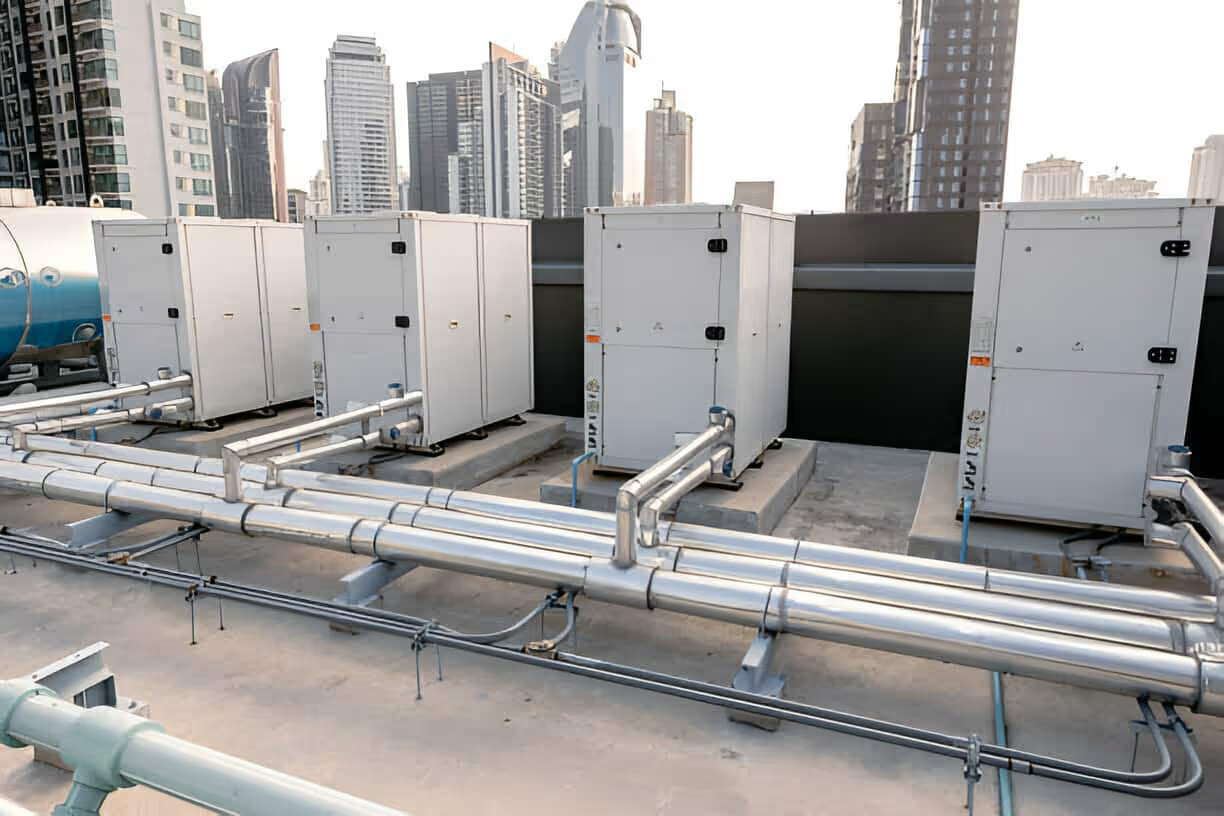
Your Guide to Lowering Energy Bills: Smart HVAC Strategies for Every Season
That number on your latest utility bill probably felt like a gut punch. You’re not imagining it—the average home’s electricity price has jumped as much as 30% in recent years. With heating and cooling making up around half of your total energy consumption, your HVAC system is the single biggest factor in that monthly expense.
Feeling powerless against rising rates is frustrating. But what if you could take back control?
The good news is, you can. Significant savings aren't just about massive, expensive upgrades. They’re about making smarter choices, understanding how your system works, and implementing a few key strategies. This guide is your playbook for turning that energy bill anxiety into a feeling of control, with tiered solutions for every budget and living situation.
Become an Energy Detective: Find Your Biggest Energy Wasters in 5 Minutes
Before you can fix the problem, you need to know where the energy is actually going. Most homes have hidden energy vampires that silently drain your wallet. Grab a flashlight and let’s do a quick audit.
Your 5-Minute Home Energy Checklist:
- Feel for Drafts: Run your hand along the edges of windows and exterior doors. Can you feel cool or warm air seeping in? These small leaks can add up to the equivalent of leaving a window open all year long.
- Check Your HVAC Filter: Pull out your system’s air filter. Is it clogged with gray dust and debris? A dirty filter forces your HVAC to work much harder, driving up costs. It’s one of the easiest and cheapest fixes.
- Look at Your Insulation: If you can access your attic, peek at the insulation. Can you see the tops of the floor joists? If so, you likely don’t have enough, and a significant amount of your heating and cooling is escaping through the roof.
- Identify Phantom Loads: Look for electronics with standby lights, chargers left plugged in, and cable boxes. These "phantom loads" can account for up to 10% of your household energy use. Plug them into a power strip you can easily switch off.
- Note Your System's Age: Find the manufacturer's label on your outdoor AC unit or indoor furnace. If it’s more than 15 years old, it’s operating far below modern efficiency standards, making it a prime suspect for high bills. An aging system often signals the need for expert HVAC repair services.
This quick audit gives you a starting point. Now, let’s look at solutions tailored to your specific situation.
Tier 1: The Renter's Playbook for Immediate Savings
Living in a rental doesn't mean you're stuck with high bills. While you can't replace the furnace, you can make a huge impact with these low-cost, high-leverage moves that require no major modifications.
Master Your Thermostat
Don't just set it and forget it. A smart thermostat strategy is your most powerful tool. The Department of Energy estimates you can save as much as 10% a year by simply turning your thermostat back 7°-10°F from its normal setting for 8 hours a day.
- Winter: Set it to 68°F when you're home and awake, and lower it when you're asleep or away.
- Summer: Aim for 78°F when you're home, and let it get warmer when you're out.
Use Fans to Your Advantage
Fans don't cool the air; they cool you. In the summer, a ceiling fan allows you to raise the thermostat setting about 4°F with no reduction in comfort. In the winter, reverse the fan's direction (it should spin clockwise) to push warm air that has risen back down into the living space.
Block Air Leaks and Sun Rays
- Draft Stoppers: Place draft snakes at the bottom of exterior doors.
- Window Insulation Film: This inexpensive, transparent film can be applied to windows in the winter to create an extra layer of insulation, reducing heat loss.
- Blackout Curtains: Use them in the summer to block intense solar heat during the day and in the winter to provide an extra thermal barrier at night.
Tier 2: The Homeowner's First Moves for Smart Investments
As a homeowner, you have more options to make lasting improvements. These investments pay for themselves in energy savings and increased comfort long before you need a full system replacement.
Schedule a Professional Energy Audit
A professional audit goes beyond our 5-minute check. Technicians use tools like blower doors and infrared cameras to pinpoint exactly where your home is losing energy. This gives you a prioritized roadmap for improvements with the best return on investment.
Seal Your Ductwork
The EPA estimates that in a typical house, about 20 to 30 percent of the air that moves through the duct system is lost due to leaks, holes, and poor connections. Sealing and insulating your ducts can be one of the most cost-effective ways to improve your home’s efficiency and comfort.
Upgrade Your Insulation
If you could see the joists in your attic, adding more insulation is a no-brainer. It's a project that can dramatically reduce heating and cooling costs and improve your home's comfort year-round. Consistent comfort relies on a well-maintained system, which is why regular HVAC maintenance services are crucial for homeowners.
Tier 3: The Ultimate Upgrade for Long-Term Savings
If your HVAC system is over 15 years old, constantly needs repairs, or struggles to keep your home comfortable, it's time to stop sinking money into an inefficient unit. A modern, high-efficiency system isn't just an expense; it's an investment that pays you back every month.
Advancements in HVAC technology are staggering. New systems use significantly less energy, provide superior comfort, and run quieter than models from just a decade ago. And thanks to new incentives, the upfront cost has never been more manageable.
Decoding the Dollars: Using 2025 Tax Credits to Slash Your Costs
Recent federal legislation has created powerful financial incentives for homeowners to upgrade to energy-efficient equipment. The Energy Efficient Home Improvement Credit is a game-changer, but the details can be confusing. Let's simplify it.
This tax credit can cover 30% of your project cost. Here’s how it breaks down for specific equipment installed after January 1, 2023:
High-Efficiency Heat Pumps -$2,000: This is the largest available credit, designed to encourage the switch to hyper-efficient, all-electric systems that both heat and cool.
High-Efficiency Furnaces - $600: If you're replacing just your gas furnace, you can still get a significant credit for choosing a top-tier model.
High-Efficiency Central AC - $600: The same credit applies to upgrading your central air conditioning unit to a modern, energy-saving model.
What do the ratings mean? To qualify, the equipment must meet strict efficiency standards. Here's a simple translation:
- SEER2 (Seasonal Energy Efficiency Ratio 2): This is the report card for an air conditioner or heat pump's cooling efficiency. The higher the number, the less electricity it uses. A SEER2 of 17 or higher is excellent.
- AFUE (Annual Fuel Utilization Efficiency): This measures how efficiently a furnace converts gas into heating energy. A furnace with a 97% AFUE rating means that 97 cents of every dollar you spend on fuel is converted into useful heat.
Navigating the options and ensuring your choice qualifies for these credits is where professional guidance becomes invaluable. A trusted partner for HVAC new installation services can help you maximize both your savings and your comfort.
Making the Right Choice: Heat Pump vs. High-Efficiency Furnace & AC
With the largest tax credit aimed at heat pumps, many homeowners are asking which system is right for them. Here’s a quick comparison to guide your decision.
The All-in-One: High-Efficiency Heat Pump
- Pros: Extremely energy-efficient for both heating and cooling. It functions as an air conditioner in the summer and reverses the process to provide heat in the winter. One system does it all, and it qualifies for the largest tax credit.
- Best For: Homeowners in moderate to mixed climates looking to maximize their energy savings and move away from fossil fuels. Modern cold-climate heat pumps are now effective even in very low temperatures.
The Power Duo: High-Efficiency Furnace and Central AC
- Pros: This traditional setup provides powerful heating, which can be beneficial in consistently frigid climates. You can upgrade one piece of equipment at a time, and the technology is familiar to most homeowners.
- Best For: Homeowners in extremely cold regions or those who prefer the intense heat produced by a gas furnace and want to stick with a conventional system.
Your Top Questions Answered
- Q: Why did my energy bill suddenly spike so much?
A: Several factors could be at play. Utility rates have increased nationwide. We may have had a season with extreme temperatures, forcing your system to run constantly. However, a sudden spike can also indicate a problem with your HVAC system itself, like a refrigerant leak or a failing component. - Q: Is a new HVAC system really worth the investment?
A: Absolutely. If your current system is over 15 years old, you could see savings of 20-40% on your heating and cooling costs with a new high-efficiency model. When you factor in the $2,000 federal tax credit and improved comfort, the return on investment is compelling. - Q: I'm a renter. Is there anything else I can do?
A: Yes. Beyond the tips above, talk to your landlord. Share information about the benefits of improved efficiency. Simple things like weather-stripping or scheduling a maintenance visit can sometimes be approved if you explain the potential for savings and improved tenant comfort. - Q: How do I claim the federal tax credit?
A: You will claim the credit when you file your federal income taxes for the year the equipment is installed. You'll need to use IRS Form 5695, Residential Energy Credits. Your HVAC installer should provide you with the necessary manufacturer certification statements for your records.
Your Path to a More Comfortable and Affordable Home
Taking control of your energy bill starts with understanding your options. By moving from quick fixes to smart investments, you can create a home that’s not only more comfortable year-round but also significantly less expensive to run.
Whether you're looking to seal a few drafts or explore the benefits of a new high-efficiency heat pump, the right partner can make all the difference. A free, no-obligation estimate from an expert can provide a clear picture of your options and help you make a confident decision for your home and your budget.