Emergency HVAC Service in East Wenatchee, WA

Scroll down to discover more
When your heating or cooling stops working during a heat wave or a freezing night in East Wenatchee, WA, it is an urgent problem—not a waiting-room one. Emergency HVAC service restores comfort, protects vulnerable household members and pets, and prevents secondary damage like burst pipes, condensation damage, or mold growth
Typical emergency HVAC scenarios in East Wenatchee
East Wenatchee experiences hot, dry summers and cold winters. Common emergencies we see include:
- Complete system failure during extreme heat or cold, leaving a home without cooling or heat.
- No heat from a furnace or heat pump during subfreezing nights.
- Air conditioner that runs but does not cool because of compressor failure, refrigerant loss, or a failed capacitor.
- Furnace ignition or pilot failure, frequent cycling, or sudden loss of blower operation.
- Sudden loss of power to HVAC system due to failed control board, tripped breakers, or wiring faults.
- Frozen evaporator coils or blocked condensate drains causing overflow and water damage risk.
- Poor indoor air quality or heavy smoke infiltration during wildfire season requiring immediate filtration and isolation.
- Safety issues such as suspected gas leaks or carbon monoxide concerns tied to heating equipment.
Rapid-response emergency procedures
When an emergency call comes in, the response follows a clear triage and dispatch workflow to prioritize safety and restore function quickly:
- Intake and triage - Basic questions identify immediate safety risks (gas smell, CO alarms, water leak), system type, and location within East Wenatchee. Priority is set for life-safety issues.
- Dispatch and ETA - A qualified technician is dispatched with parts and tools appropriate to the described issue. Typical dispatch windows vary by time of day and location; technicians carry common replacement parts for faster on-site resolution.
- Safe arrival and assessment - The technician performs an initial safety sweep: checks carbon monoxide detectors, gas odors, electrical hazards, and water intrusion before powering equipment or opening panels.
- Immediate stabilization - If needed, technicians make temporary adjustments to stabilize the environment: isolate a leaking component, secure a failed blower, or establish temporary heat or cooling modes while diagnostics continue.
On-site diagnostics and what technicians check
A methodical, documented diagnostic process ensures technicians identify root causes rather than just symptoms:
- Visual inspection of outdoor unit, indoor furnace/air handler, ductwork, and thermostat.
- Electrical checks: breakers, fuses, contactors, capacitors, control board diagnostics, and voltage measurements.
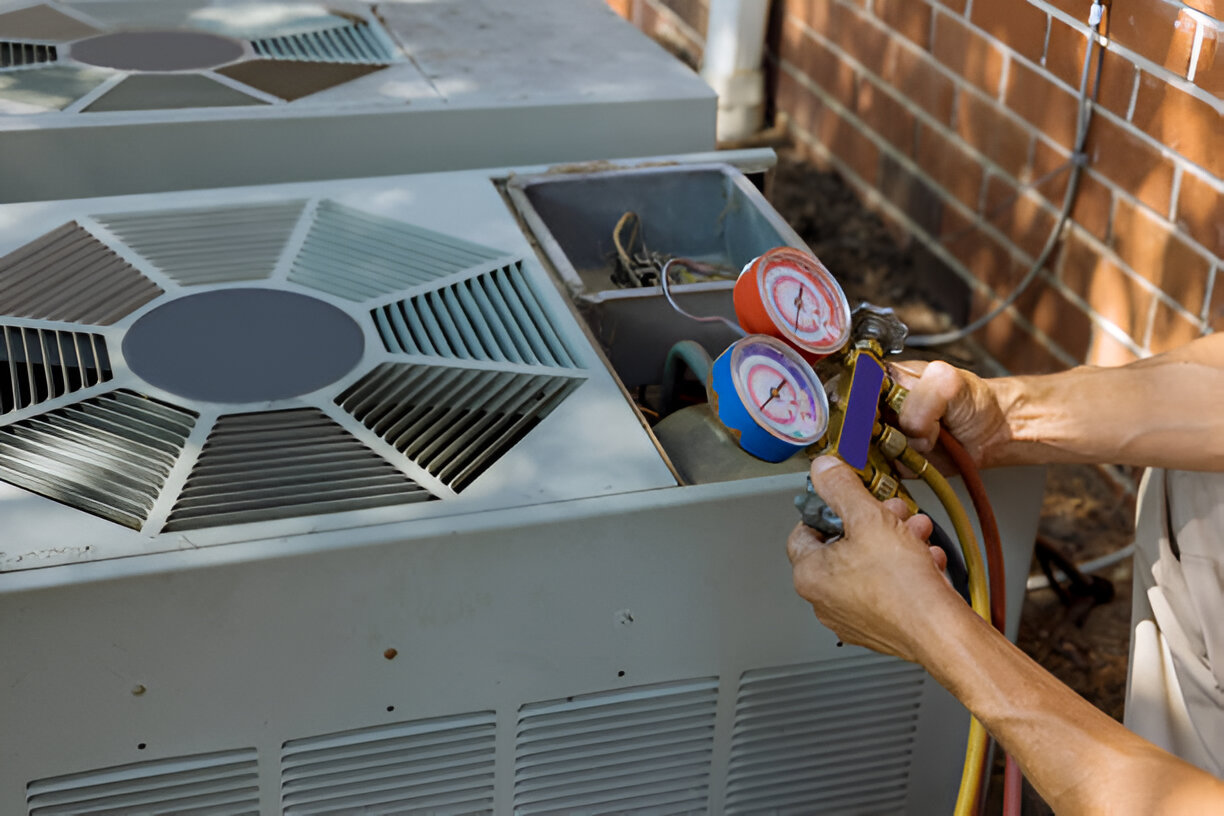
- Refrigeration system checks: pressures, leak detection, compressor operation, and refrigerant levels.
- Airflow and coil checks: filter condition, blower motor amp draw, duct restrictions, and coil cleanliness.
- Safety systems: limit switches, flame sensors, ignition systems, and venting for combustion appliances.
- Indoor air quality checks when smoke or contaminants are present: filter type, MERV ratings, and sealing checks.
Technicians provide a clear explanation of findings and outline immediate options on-site.
Temporary repairs vs long-term solutions
Emergencies require pragmatic decisions balancing speed, safety and durability. Common on-site options include:
- Temporary repairs to restore function immediately
- Replacing failed capacitors or contactors to get an AC running again.
- Replacing a blower relay or fan motor components to restore circulation.
- Patching or isolating minor refrigerant leaks and charging for temporary operation until a planned repair.
- Clearing condensate clogs and securing drip pans to prevent water damage.
- Replacing filters and adjusting controls to reduce smoke infiltration during wildfire events.
- Long-term repairs and replacements
- Replacing failed compressors, control boards, or heat exchangers when temporary fixes are not safe or effective.
- Permanent refrigerant leak repairs brazed and pressure tested to industry standards.
- Full system replacement recommendations if the unit is near end of life or unsafe to repair.
- Upgrades to thermostats, zoning, or filtration to prevent repeat emergencies and improve efficiency.
Technicians will explain the tradeoffs, estimated timelines for permanent repairs, parts availability, and any interim operating limitations.
Safety and code considerations
Emergency HVAC work follows safety protocols and local regulations:
- Gas appliance repairs include leak testing and verifying combustion venting and exhaust.
- Electrical repairs include proper disconnects, secure wiring, and compliance with local electrical codes.
- Refrigerant handling follows environmental and EPA rules for recovery and disposal.
- Where structural or code issues are identified, technicians document concerns and recommend next steps.
Why timely response matters in East Wenatchee
East Wenatchee’s climate puts homes at risk both from heat-related issues in summer and freeze-related damage in winter:
- High summer temperatures can make indoor conditions unsafe for infants, elderly occupants, or those with health issues if cooling fails.
- Cold snaps increase the risk of frozen pipes, which can lead to costly water damage if heating is not restored quickly.
- Wildfire smoke during late summer and early fall can create acute indoor air quality emergencies that need immediate filtration and isolation measures.
Prompt, professional emergency service minimizes health risks and limits property damage.
Coverage area and service logistics
Emergency HVAC support is focused on East Wenatchee and surrounding communities in the Wenatchee Valley. Response times vary by time of day, traffic, and distance from central dispatch. Technicians in the valley carry commonly needed parts and diagnostic equipment to speed repairs. Remote or harder-to-reach locations may require longer travel, and technicians will advise on expected timelines during initial triage.
Practical steps to take while waiting for emergency service
- If you smell gas, evacuate immediately and follow local emergency procedures before calling for HVAC help.
- If you suspect carbon monoxide, leave the home and seek fresh air; do not run combustion appliances.
- Turn off HVAC system if there is water pooling around electrical components or the outdoor unit is submerged.
- Replace or install a high-efficiency disposable filter to reduce smoke and particulate levels in wildfire events.
- For loss of heat in freezing conditions, open cabinet doors to allow more heat to circulate around plumbing and consider safe supplemental heating sources only if ventilation is adequate.
FAQs
Q: How quickly can an emergency HVAC technician arrive in East Wenatchee?
A: Response times vary by time of day and location. During typical conditions technicians aim to dispatch quickly and carry common parts for fast repairs. Exact ETA is provided during intake after assessing location and availability.
Q: Will you make temporary fixes or do full replacements during an emergency visit?
A: Technicians will stabilize the system to restore safe operation immediately whenever possible, then recommend permanent repairs or replacement when temporary fixes are not suitable or safe.
Q: Are carbon monoxide and gas safety checks included in emergency service?
A: Yes. Safety sweeps for gas leaks and carbon monoxide risks are a priority. If a safety hazard is found, technicians will follow prescribed shutoff and testing procedures.
Q: Can you help with indoor air quality emergencies like wildfire smoke?
A: Yes. Emergency responses can include high-efficiency filter replacement, sealing and pressurization adjustments, and recommendations for longer-term filtration upgrades to improve indoor air quality.
Q: What HVAC systems do you service during emergencies in East Wenatchee?
A: Emergency service generally covers furnaces, heat pumps, central air conditioners, mini-splits, ductless systems, and associated controls and ductwork commonly found in local homes.
Q: What should I have ready when I request emergency HVAC help?
A: Be prepared to describe symptoms, any safety alarms (CO, gas), the system type and age if known, and your address so dispatch can prioritize and send appropriate equipment.